

Most Tulsa homeowners don't think about their electrical panel until something tells them to: a breaker that won't stay reset, lights that dim every time the AC kicks on, or a new EV charger, generator, or appliance that pushes the home past what the existing panel was built for.
That's especially common here. A lot of Tulsa neighborhoods are full of homes built when 100-amp service was generous, and many of those panels have been quietly carrying the extra load of remodels, additions, and modern equipment for decades. Eventually they catch up.
This guide walks through the ten clearest signs an electrical panel upgrade is on the horizon, what 100-amp vs. 200-amp service really means, and what to expect when a licensed electrician handles the work.
10 signs you may need
a panel upgrade.
- 1Breakers trip often
- 2Lights flicker or dim
- 3Panel feels warm
- 4Burning smell near outlets or panel
- 5Buzzing or crackling sounds
- 6Fuse box or outdated panel
- 7No room for new breakers
- 8Adding EV charger, generator, or hot tub
- 9Two-prong outlets or old wiring
- 10Storm-related electrical issues
What Does an Electrical Panel Do?
The Panel Is the Distribution Center for Your Home's Power
Your electrical panel takes the power coming in from PSO and distributes it across the circuits that feed every outlet, switch, and hard-wired appliance in the house. Each breaker is designed to protect a specific circuit by shutting off power when there's too much load, a short, a ground fault, or another unsafe condition. When the panel is working correctly, you barely notice it. When it isn't, you start to notice it everywhere.
A Panel Upgrade Is Not Just "More Breakers"
A real panel upgrade can involve any combination of:
- Replacing the electrical panel itself (the box, breakers, and bus bars)
- Increasing service capacity (for example, going from 100-amp to 200-amp)
- Reworking circuits that were over-loaded or improperly combined
- Updating grounding and bonding to current code
- Coordinating permits and inspections with the local jurisdiction
- Coordinating with PSO if the service drop or meter base is involved
- Making physical room for modern equipment (surge protective devices, EV charger circuits, generator transfer switch)
That's why "just swap the panel" estimates from anyone other than a licensed electrician should be treated with caution.
Panel Upgrades Should Be Handled by Licensed Electricians
This is not a DIY project. Panel work involves service equipment, utility coordination, permits, inspection, and serious shock and fire risk. The work also has long-term implications for safety, insurance, and resale. See Panel Upgrades for an overview of how M Electric handles this work in Tulsa.
Sign #1 — Your Breakers Keep Tripping
Occasional Trips Can Happen — Repeated Trips Are Different
A breaker that trips once and resets cleanly is doing exactly what it's designed to do: respond to a temporary overload or fault. A breaker that trips repeatedly, won't stay reset, or trips immediately when reset is telling you something else is going on.
Common Causes of Repeated Breaker Trips
- An overloaded circuit (too many devices on one breaker)
- A faulty appliance pulling current it shouldn't
- Damaged or aged wiring
- A breaker that's worn out and tripping below its rating
- Panel capacity issues — the home is asking for more than the service can deliver
- Moisture or storm damage inside the panel or on outdoor circuits
Don't Keep Resetting the Breaker
Repeatedly resetting the same breaker, especially one that trips immediately, can be dangerous if the underlying problem is still live. Reset once. If it trips again, leave it off and call a licensed electrician.
If a breaker keeps tripping after you reset it once, contact M Electric for electrical troubleshooting.
Sign #2 — Lights Flicker or Dim When Appliances Turn On
Brief Dimming Can Be a Load Issue
A momentary dim when a high-draw motor starts isn't always a panel problem — most homes show some sag when an AC compressor or large motor kicks on. But if the dimming is frequent, severe, or affects multiple rooms, that's worth looking into.
Pay Attention When These Appliances Start
- Central air conditioner or heat pump
- Furnace blower
- Refrigerator or freezer
- Microwave (especially older units)
- Washer and dryer
- Sump or well pump
- Power tools and shop equipment
- EV charger
Flickering in Multiple Rooms Is More Concerning
When flickering is isolated to one circuit, the issue is usually local — a loose neutral, a worn switch, or an aging fixture. When it's happening throughout the house, the cause may be the panel, the service drop, the main breaker, or even a utility-side issue. That deserves a real diagnosis. See Wiring Repair and Panel Upgrades.
Sign #3 — Your Panel Feels Warm, Buzzes, or Smells Burned
Your Panel Should Not Be Hot or Noisy
A faint hum from a 200-amp main is normal. A loud buzz, crackle, pop, or noticeable heat is not. Neither is a fishy or plastic-burning smell anywhere near the panel.
These symptoms typically point to one of: a loose connection arcing inside the panel, a failing breaker, water that's gotten into the enclosure, or surge damage from a recent storm. Any of those can develop into a serious fire risk.
Stop Using Affected Circuits
If you can identify which circuit is involved (a single warm switch, a buzzing outlet, or one zone of the house with strange behavior), shut it off at the breaker if you can do so safely. If the panel itself is the problem, leave it alone — don't open it, don't try to find which breaker.
Don't Open the Panel Cover
Homeowners should not remove the panel cover (the dead front behind the door) or touch anything inside the panel. The bus bars and breaker connections behind that cover are live, and the energy they carry is dangerous.
If your panel smells burned, feels hot, or makes crackling sounds, contact M Electric right away.
Sign #4 — You Have an Older Fuse Box or Outdated Panel
Fuse Boxes and Old Panels Were Not Designed for Today's Loads
Many Tulsa homes built before the 1970s started with fuse boxes; many built in the 1970s and 1980s have panels that haven't been touched since. Modern households put significantly more electrical demand on a service than those panels were originally engineered to deliver — central AC, heat pumps, induction ranges, multiple refrigerators, home offices, smart devices, EV chargers, and entertainment systems all pull current that wasn't on the table in 1972.
Some Older Panels Can Create Insurance or Resale Concerns
Without naming specific brands, certain panels manufactured decades ago have come under widespread scrutiny from home inspectors and insurance carriers due to documented reliability concerns. If your home is older and you've never had your panel formally evaluated, ask a licensed electrician to identify the panel make and model and tell you whether it's one of those.
This question routinely comes up during home inspections, insurance reviews, and remodel permitting, and finding the answer before a buyer or carrier finds it for you is almost always cheaper.
Older Tulsa Homes Should Be Inspected Before Major Upgrades
If your home is older — especially in mid-century neighborhoods or properties that have been remodeled by multiple owners — ask a licensed electrician to inspect the panel and a representative sample of branch circuits before you start any major project. See Panel Upgrades and Wiring Repair.
Sign #5 — You're Adding a Major New Electrical Load
This is the most common reason a homeowner with no obvious problems calls us about their panel: they're planning something new, and the project pushes the system past what it was sized for.
EV Chargers Often Require Panel Capacity Planning
Level 2 EV chargers typically need a dedicated 240-volt circuit (commonly 40–60 amps) and enough headroom on the service to support them without nuisance trips. A load calculation is the right way to find out whether your existing panel can absorb that addition or whether an upgrade should come first. See Panel Upgrades.
Generators Require Proper Transfer Equipment
A standby generator — or even a portable generator with an interlock or transfer switch — needs careful planning at the panel. Backfeeding a generator into a wall outlet is dangerous to PSO line crews and to the home, and "just running an extension cord" is not a permanent solution. See Generator Installation.
Remodels and Additions Can Outgrow the Existing Panel
Other common projects that push panel capacity:
- Kitchen remodel with new induction range or double oven
- Bathroom remodel with heated floors or a tankless water heater
- Garage conversion to living space
- Home addition or finished basement
- Detached shop or workshop
- Outdoor kitchen
- Hot tub or spa
- Pool equipment
- Dedicated home office buildout
- Additional HVAC zone or mini-split system
Any of those can reveal a panel that's been quietly maxed out for years. An evaluation up front saves you from a half-finished project waiting on an electrician.
Planning an EV charger, generator, remodel, or new appliance? Have your panel evaluated first so the project is safe and properly sized. → Contact M Electric.
Sign #6 — You Don't Have Enough Breaker Space
A Full Panel Limits Upgrades
Open up the panel door and look at the layout (don't open the dead front behind it). If every slot is filled, adding any new circuit becomes more involved than just snapping in another breaker.
Double-Tapped or Crowded Panels Need Professional Review
Sometimes a previous installer added wires to existing breakers in ways that weren't intended by the manufacturer (often called "double-tapping" in the trade), or the panel has been modified over time in ways that aren't quite right. We'll often spot this during a routine evaluation. The fix isn't always a full upgrade — but it always requires a licensed electrician, not a homeowner with a screwdriver.
Subpanel vs. Full Panel Upgrade
The right answer isn't always to replace the main panel. Sometimes a subpanel — fed from the main and serving a specific area like a garage, workshop, or addition — solves the problem at a fraction of the cost. Other times, the main service is genuinely too small and a full upgrade is the only path forward. A load calculation tells the story.
Sign #7 — Your Home Still Has Two-Prong Outlets or Ungrounded Circuits
Two-Prong Outlets Often Point to Older Wiring
Not every two-prong outlet means a panel upgrade is required. But it's a strong signal that the home's electrical system was installed before modern grounding requirements, and it's worth a real evaluation. The wiring behind those outlets may be original, the grounding system may not be what current code calls for, and certain protective devices (GFCI, AFCI, surge protection) work best on a properly grounded system.
Modern Appliances and Electronics Need Safer, Grounded Circuits
Home offices, sensitive electronics, modern appliances, and any kind of surge protection all depend on a properly functioning, grounded electrical system. Surge protection, in particular, has nowhere to send absorbed energy if the grounding electrode system isn't intact.
Panel Upgrades and Rewiring Sometimes Go Together
For older homes, the cleanest solution is often a coordinated project: panel work, grounding updates, targeted rewiring of problem circuits, and new circuits where needed. See Wiring Repair.
Sign #8 — You're Relying on Extension Cords or Power Strips
Extension Cords Are Not a Permanent Wiring Solution
If a room doesn't have enough outlets and you've solved that with a permanent extension cord or a daisy-chained power strip, that's a usability and safety issue — not a layout preference. Cords aren't designed for permanent in-wall or under-rug use, and many fires start exactly there.
Overloaded Outlets Can Trip Breakers or Overheat
The two most common consequences of an overloaded outlet are nuisance breaker trips and slow-cooking damage to the outlet itself. Loose connections, scorched receptacle backs, and warm faceplates are all warning signs.
New Circuits May Reveal the Need for a Panel Upgrade
Adding outlets or dedicated appliance circuits is a normal job — but if your panel is already full or your service is undersized, that "small" project may turn into a panel evaluation. Better to find that out at the planning stage than mid-install. See Electrical Repair.
Sign #9 — You Have Storm-Related Electrical Problems
Tulsa Storms Expose Weak Electrical Systems
Spring thunderstorms, ice storms, lightning, wind-blown rain, and the inevitable PSO outage cycle all stress your home's electrical system. A panel that was marginal before the storm often isn't marginal afterward — it's broken.
Warning Signs After a Storm
- Breakers that trip after power is restored
- Partial power (some rooms or circuits work; others don't)
- Persistent flickering lights
- GFCIs that won't reset
- A burning smell anywhere near outlets, the panel, or appliances
- Buzzing or crackling at the panel
- Outdoor circuits that have stopped working
If you see any of those after a storm, schedule a post-storm electrical inspection before you re-energize major equipment. See Electrical Repair.
Surge Protection May Be Part of the Solution
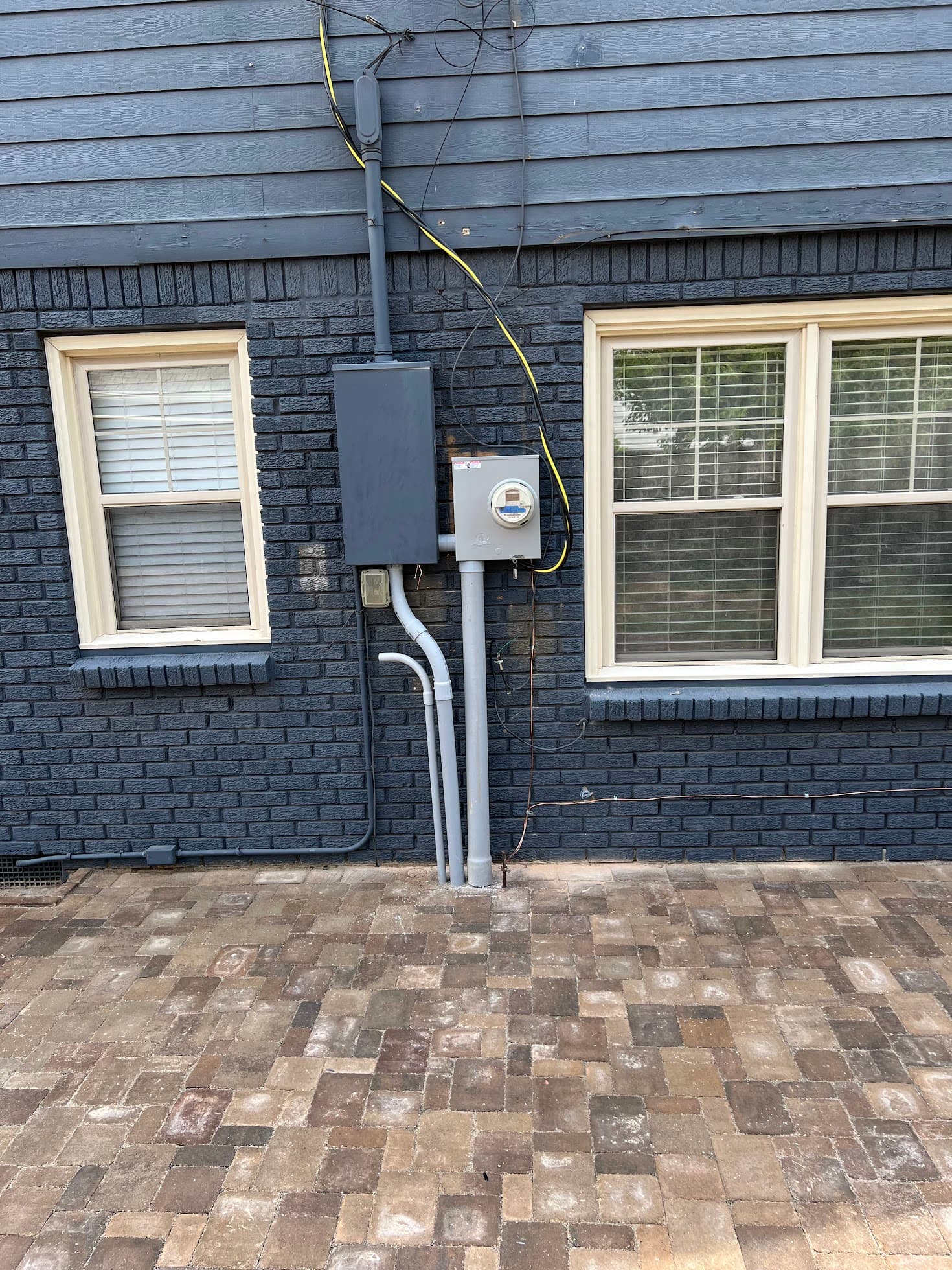
If your panel is in good shape but your home keeps absorbing surge damage, a panel-level surge protective device is the right next step. If the panel itself is the problem, surge protection should come *after* the panel upgrade, not before. See Whole-Home Surge Protection.
Sign #10 — You're Planning to Sell, Buy, or Remodel a Tulsa Home
Electrical Panels Often Come Up During Inspections
Home inspectors regularly flag outdated panels, double-tapped breakers, missing or illegible labeling, undersized service, and obvious capacity issues. A flagged panel can shrink the buyer pool, complicate financing, or turn into a last-minute price negotiation.
Buyers Want Confidence in the Electrical System
A documented panel upgrade — done by a licensed electrician, with permits and final inspection — removes friction during resale and gives buyers something concrete to feel good about.
Remodels Can Trigger Code and Permit Requirements
Major electrical work as part of a remodel often requires permits, inspections, and modern code compliance for the affected scope. A licensed electrician handles those requirements as part of the job — that's part of the value of using one.
If you're buying, selling, or remodeling in the Tulsa area, see our Tulsa Service Area page or contact us for a panel evaluation.
100 Amp vs. 200 Amp Service: Do You Need More Capacity?
Many Older Homes Have 100-Amp Service
A 100-amp service can be enough for a smaller home with modest loads — gas heat, gas cooking, gas water heater, no central AC, no EV. As soon as the home moves toward all-electric heating and cooking, multiple HVAC zones, an EV charger, or any kind of shop or hot tub circuit, 100 amps gets crowded fast.
200-Amp Service Is Common for Modern Homes
Most modern Tulsa homes are built with 200-amp service for a reason: it gives real headroom for today's electrical needs without being so large that it's wasteful. That doesn't mean 200 amps is automatically the right answer for every home — but it's the most common upgrade target.
The Right Answer Depends on a Load Calculation
A licensed electrician runs a load calculation that considers:
- Square footage and conditioned area
- HVAC equipment (central AC, heat pumps, electric strip heat, mini-splits)
- Major appliances (electric range, oven, dryer, water heater)
- EV charging (current and planned)
- Generator plans (and whether a transfer switch is involved)
- Hot tub, pool, shop, or detached structure circuits
- Remodel plans for the next several years
- Existing panel condition and breaker space
- Current service size
The output is a real number — not a guess — that tells you whether your service is adequate, marginal, or genuinely undersized.
What Happens During a Panel Upgrade?
Step 1: Inspection and Load Evaluation
We start by reviewing the existing panel, the service equipment, the grounding system, and your current and planned loads. Photos and measurements get documented as a baseline.
Step 2: Recommendation
Based on what we find, the recommendation may include any of: replacing the panel, upgrading the service, adding a subpanel, reworking specific circuits, adding surge protection, or coordinating wiring repair. A clear written quote follows.
Step 3: Permits and Utility Coordination
Panel upgrades typically require permits and inspections, and any work that affects the meter base or service drop requires PSO coordination. We handle those steps so you don't have to track them.
Step 4: Installation and Final Inspection
On install day, the electrician will coordinate the brief power shutoff, replace or rebuild the panel, terminate every circuit cleanly, label everything, test the system, and walk you through what's changed. Final inspection by the AHJ closes the project.
Schedule a panel upgrade evaluation with M Electric.
Should You Upgrade Your Panel Before Surge Protection, an EV Charger, or a Generator?
The honest answer is "sometimes." Here's how to think about it.
Before Surge Protection
A surge protective device works best as part of a healthy electrical system with intact grounding and bonding. If your panel is outdated, damaged, or compromised, address that first — then add surge protection. See Whole-Home Surge Protection.
Before EV Charging
Level 2 EV chargers typically require a dedicated 240V circuit and meaningful capacity. If the panel is full or the service is undersized, the charger can't simply be added. A load calculation tells you whether the charger fits or whether the panel needs to come first.
Before Generator Installation
Standby generators require a transfer switch, panel coordination, and (often) circuit re-grouping to identify "essential" loads. If the panel is already at the edge of what it can handle, generator planning is the right time to upgrade. See Generator Installation.
Bottom Line: Do You Need an Electrical Panel Upgrade?
A panel upgrade may be the right move if your home has repeated breaker trips, flickering lights, partial power, outdated equipment, no room for new circuits, or major upgrades planned in the next few years.
But the best first step is not guessing. It's having a licensed electrician inspect the panel, run a real load calculation, and walk you through your options — repair vs. replace, subpanel vs. service upgrade, do-now vs. do-later.
Not sure whether your Tulsa home needs a panel upgrade? Contact M Electric for a panel inspection and an honest recommendation.
Frequently asked questions.
How do I know if I need an electrical panel upgrade?
+
You may need a panel upgrade if breakers trip often, lights flicker when appliances start, the panel feels warm or smells burned, you still have a fuse box or older panel, or you are adding major equipment like an EV charger, generator, hot tub, or new HVAC system. A licensed electrician can confirm with a panel inspection and load calculation.
Is 100-amp service enough for a Tulsa home?
+
It depends on the home. Smaller homes with gas heat, gas cooking, and modest loads can run fine on 100 amps. Most modern homes need more capacity because of HVAC systems, electric appliances, home offices, EV chargers, and remodels. A licensed electrician can run a load evaluation to give you a real answer.
Should I upgrade to 200-amp service?
+
A 200-amp upgrade often makes sense if your current panel is overloaded, outdated, full, or unable to support planned upgrades. It is the most common modern target, but the right answer depends on your home's load calculation.
Why do my breakers keep tripping?
+
Breakers can trip because of overloaded circuits, faulty appliances, damaged wiring, moisture inside the panel, worn breakers, or panel capacity limits. If the same breaker trips repeatedly, stop resetting it and call a licensed electrician.
Can I replace my electrical panel myself?
+
No. Electrical panel replacement is not a DIY project. It involves service equipment, permits, inspections, utility coordination, and serious shock and fire risk. Use a licensed electrician.
Will a panel upgrade stop flickering lights?
+
It may, if the flickering is caused by panel capacity or service issues. Flickering can also come from wiring problems, loose connections, large appliance loads, or utility-side issues. The first step is diagnosis, not assumption.
Do I need a panel upgrade before installing an EV charger?
+
Possibly. Many Level 2 EV chargers require a dedicated 240V circuit and enough available panel capacity. An electrician can run a load calculation and tell you whether your existing panel can safely support the charger, or whether the panel should come first.
How long does a panel upgrade take?
+
The timeline depends on the home, the scope, permit requirements, and whether utility coordination is needed. A straightforward panel replacement may take a single day, while a full service upgrade or a project paired with rewiring can run longer.